
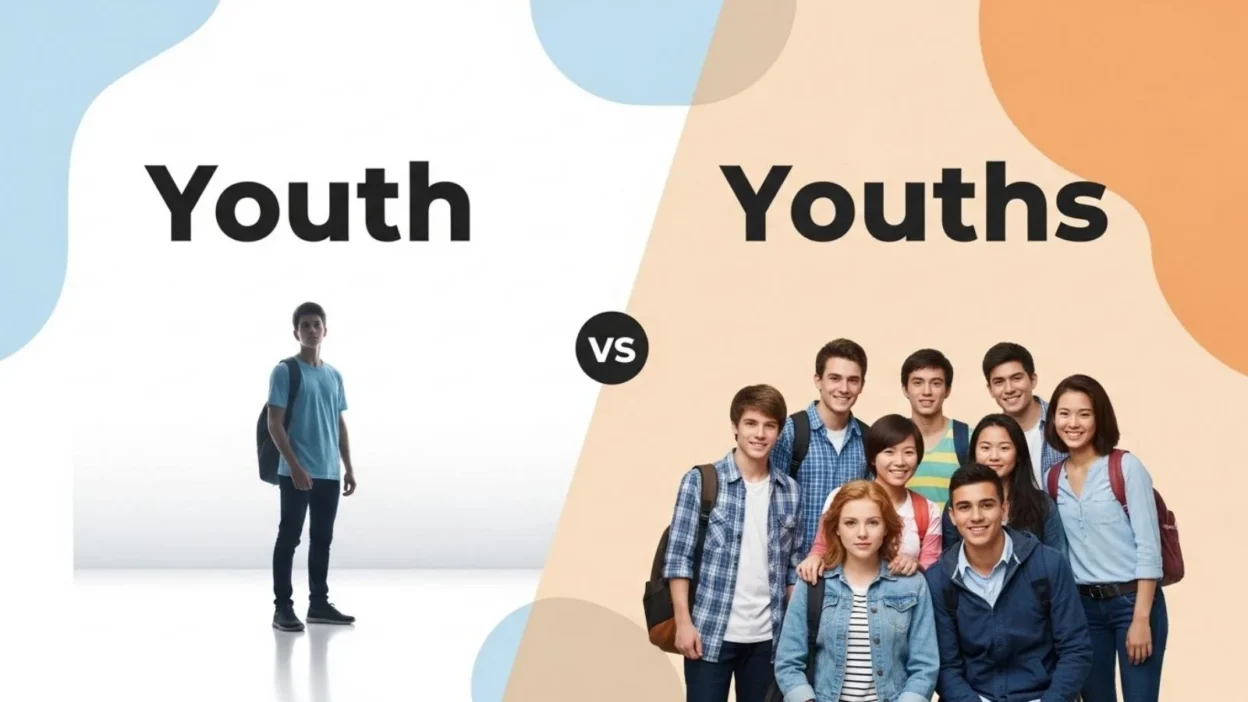
Many people search for “youth or youths” because both words look correct, but they are used in different ways. This can be confusing for students, writers, and English learners. You may see youth in one sentence and youths in another. Then you may ask, “Which one is right?”
The simple answer is that both words are correct. But they do not always mean the same thing. Youth can mean young people in general, or the time when a person is young. Youths is the plural form, and it usually means more than one young person.
This topic matters because the wrong choice can make your writing sound strange. In some cases, youth sounds more natural. In other cases, youths is the better word.
In this guide, you will learn the difference between youth or youths in easy Grade 4 language. You will see simple meanings, clear tables, and everyday examples.
Youth or Youths – Quick Answer
The quick answer is simple:
- Youth can mean young people in general, or the time of being young.
- Youths means more than one young person.
Here is an easy table:
| Word | Meaning | Example |
| Youth | Young people in general, or the time of being young | Youth is a special time in life. |
| Youths | More than one young person | Two youths were playing football. |
So, if you are choosing between youth or youths, remember this:
Youth = general idea or one young person
Youths = more than one young person
What Does Youth Mean?
The word youth has more than one meaning.
It can mean:
- the time when a person is young
- young people as a group
- one young person, in some cases
Easy examples
- “He spent his youth in a small town.”
- “The center helps youth in the community.”
- “A youth was waiting at the bus stop.”
In many sentences, youth is used as a group word. It talks about young people in a general way.
What Does Youths Mean?
Youths is the plural form of youth when you mean more than one young person.
Easy examples
- “Three youths were riding bikes.”
- “The police spoke to two youths in the park.”
- “The coach worked with local youths.”
So youths is correct when you are talking about several young people as countable people.
The Origin of Youth or Youths
The word youth is very old. It has been used in English for a long time. It comes from old Germanic roots and has long meant young age or a young person.
Later, English also used youths as the plural form when talking about more than one young person.
So this is not a spelling mistake. Both words are real English words. The key is knowing when to use each one.
British English vs American English Spelling
There is no spelling difference between British English and American English.
In both forms of English:
- Youth is spelled youth
- Youths is spelled youths
Spelling comparison table
| Word | US English | UK English |
| Youth | Youth | Youth |
| Youths | Youths | Youths |
So the spelling stays the same in both.
Which Word Should You Use?
Use youth when you mean:
- young people in general
- the period of being young
- one young person, if the sentence fits
Use youths when you mean:
- more than one young person
Simple examples
- “This program supports youth.”
- “She enjoyed her youth.”
- “Two youths were talking outside.”
Easy advice from the audience
| Situation | Best word |
| General group of young people | Youth |
| The time of being young | Youth |
| More than one young person | Youths |
In many modern sentences, youth sounds more natural when talking about young people as a group.
Common Mistakes with Youth or Youths
Many people make these mistakes:
| Mistake | Correct idea |
| Youth is always singular | It can also mean young people in general |
| Youths is always wrong | It is correct for more than one young person |
| Youth and youths mean exactly the same thing | They are related, but not always used in the same way |
| Youth means only age | It can also mean a young person or young people |
These mistakes happen because youth has more than one meaning.
Easy rule
Remember this simple line:
Youth is general. Youths is plural.
That rule will help in most cases.
Youth or Youths in Everyday Examples
Here are simple examples of how people use these words.
In an email
“Our club offers free classes for youth.”
In news writing
“Two youths helped an old man cross the road.”
On social media
“Today’s youth love using new apps.”
In formal writing
“The program supports local youth through sports and learning.”
These examples show that youth is often used for a group, while youths is used for counted people.
Youth or Youths – What People Usually Mean
When people search “youth or youths,” they usually want to know:
- which word is correct
- which word sounds natural
- when to use each word
- whether youths is a real word
This is a common grammar question. The good news is that both words are correct. The choice depends on the sentence.
If you are talking about young people in general, youth is often better.
If you are talking about several young people as separate people, youths are better.
Youth vs Youths Comparison Table
| Feature | Youth | Youths |
| Real word | Yes | Yes |
| Means young age | Yes | No |
| Means young people in general | Yes | Sometimes |
| Means more than one young person | Not usually | Yes |
| Common in general writing | Very common | Less common |
This table makes the difference easier to see.
FAQs:
1. Is youths a real word?
Yes. Youths is a real English word.
2. What is the difference between youth and youths?
Youth is often used for young people in general or the time of being young. Youths means more than one young person.
3. Can youth be plural?
Yes, in some cases. It can mean young people as a group.
4. Which sounds more natural: youth or youths?
In many general sentences, youth sounds more natural.
5. Is it correct to say “the youths”?
Yes, that is correct when you mean several young people.
6. What does “in his youth” mean?
It means when he was young.
7. Which word should I use in formal writing?
Use youth for a general group meaning, and youths when counting several young people.
Conclusion
The difference between youth or youths is simple once you know the basic rule. Youth is often used for the time of being young or for young people in general. Youths is the plural form when you mean more than one young person.
That is why both words are correct. They are not wrong spellings. They just have different uses. If you say, “Today’s youth need support,” you are talking about young people as a group. If you say, “Three youths were in the park,” you are talking about several young people.
The easiest way to remember the difference is this: youth is general, and youths is plural. That simple rule will help you choose the right word in most sentences.
So when you see youth or youths, do not think one is wrong. Think about the meaning of your sentence. That will help you pick the best word.

I write educational content focused on English vocabulary, word comparisons, and grammar clarity. I enjoy breaking down complex language topics into simple explanations that readers of all levels can understand. My work helps learners improve their confidence in writing and communication.