
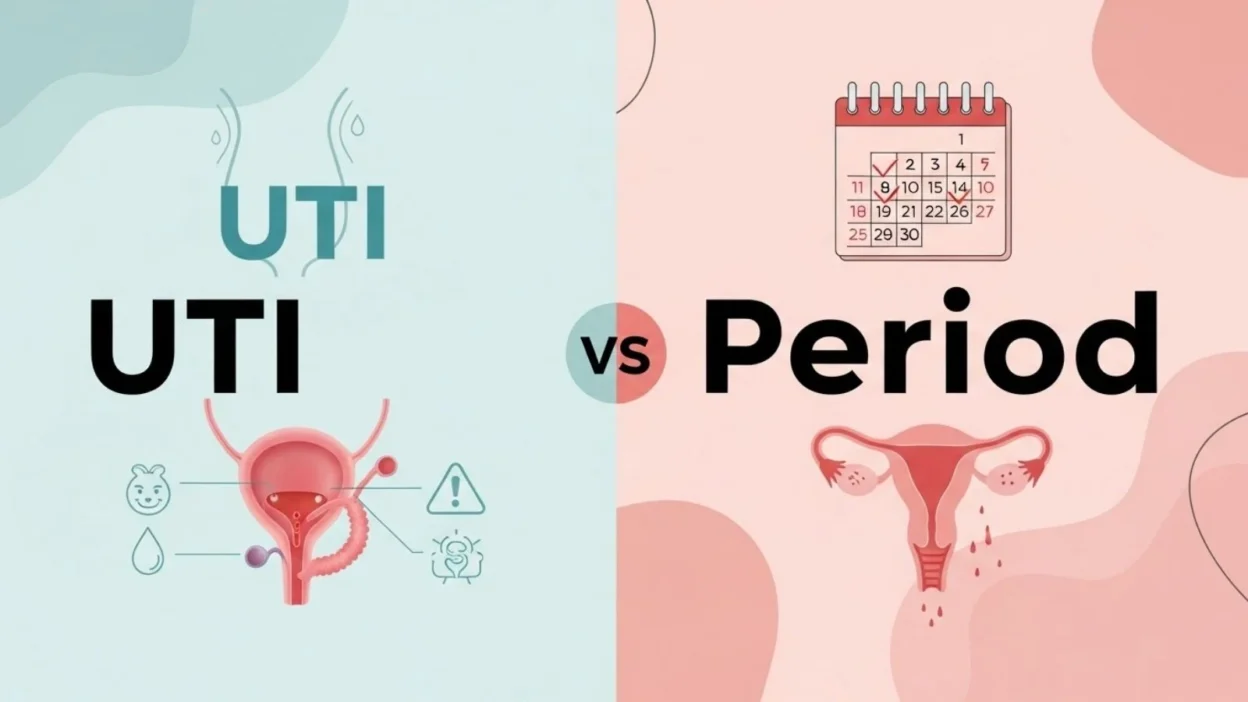
Many people feel pain in the lower belly and ask the same question: UTI or period? This is a common search because the signs can feel close at first. A period can cause cramps, pressure, back pain, and tiredness. A UTI can also cause lower belly pain and discomfort. That is why many people get confused.
Still, these two are not the same. A UTI is a urinary tract infection. It often causes burning when you pee, a strong need to pee often, and cloudy or bad-smelling urine. A period is part of the monthly cycle. It often causes cramps, bloating, back pain, and bleeding. Some signs can overlap, but some signs are very different.
In this article, you will get a quick answer, simple examples, easy tables, and clear advice. It will help you understand the difference between very simple words. It will also help you know when a symptom may need medical care.
UTI or Period – Quick Answer
Quick answer:
Use UTI when you mean a urine infection that causes burning pee, urgent trips to the bathroom, and bladder pain. Use period when you mean monthly bleeding with cramps, bloating, and cycle-related pain.
Here is the easy difference:
- UTI often causes burning when you pee, needing to pee often, and pressure in the bladder area.
- Period often cause bleeding, cramps in the lower belly, back pain, and bloating.
Simple examples
- “It burns when I pee, and I keep going to the bathroom. That sounds more like a UTI.”
- “I have cramps, bloating, and my monthly bleeding has started. That sounds more like a period.”
- “I feel low pressure in my belly, and my urine smells strong. It may be a UTI.”
- “My lower back hurts, and I have my usual cycle pain. It may be my period.”
So, when people search for UTI or period, they usually want to know which problem matches their signs better.
The Origin of UTI or Period
This keyword is not a spelling search like “color or colour.” It is a meaningful search. People are comparing two different health terms.
Origin of “UTI”
UTI is short for urinary tract infection. It means an infection in the urinary system. This often affects the bladder and can make peeing painful or frequent.
Origin of “period.”
A period is the monthly shedding of the womb lining. It causes vaginal bleeding and may also cause cramps, lower back pain, and mood changes.
Why do people mix them up
People compare UTI or period because both can cause:
- lower belly pain
- pelvic pressure
- tiredness
- discomfort in the body
But some clues help:
- Burning when you pee points more to a UTI.
- Bleeding at your usual time of the month points more to a period.
- Needing to pee again and again points more to a UTI.
- Cramps and bloating point more to a period.
British English vs American English Spelling
Here is an important point: there is no British or American spelling difference here.
- UTI is written as UTI in American English.
- UTI is written as UTI in British English.
- Period is spelled period in American English.
- Period is spelled period in British English.
So this is not a spelling problem. It is a meaning and symptom problem.
Spelling comparison table
| Term | American English | British English | Notes |
| UTI | UTI | UTI | Same form |
| urinary tract infection | urinary tract infection | urinary tract infection | Same spelling |
| period | period | period | Same spelling |
| menstrual period | menstrual period | menstrual period | Same spelling |
Simple explanation
The spelling stays the same in both places. You only need to choose the correct term for the symptom you mean.
Which Spelling Should You Use?
Since the spelling does not change, the better question is this:
Which term should you use?
Use “UTI” when:
- It burns when you pee
- You need to pee very often
- You feel a strong urge to pee
- Your urine looks cloudy or smells strong
- You feel pressure in the bladder area
Example:
“I think I have a UTI because it hurts when I pee.”
Use “period” when:
- You have monthly bleeding
- You feel cramps in the lower belly
- You have bloating
- The pain matches your cycle
- You have your usual period signs
Example:
“My period started, and I have cramps.”
Advice from the audience
- For US readers: use simple words like UTI and period pain.
- For UK readers: the same simple words work well.
- For global readers: clear phrases like burning when peeing and period cramps are easy to understand.
The best term is the one that matches the main symptom.
Common Mistakes with UTI or Period
Many people make small mistakes with these words. Here are some common ones.
1. Thinking all pelvic pain is a period
Wrong: “It is low pain, so it must be my period.”
Right: “Low pain can also happen with a UTI.”
2. Ignoring burning when peeing
Wrong: “It hurts low down, but it is only my cycle.”
Right: “Burning when peeing is a strong sign of a UTI.”
3. Ignoring bleeding patterns
Wrong: “Any bleeding means a period.”
Right: “Not all bleeding is a normal period.”
4. Thinking a UTI always causes fever
Wrong: “No fever means no UTI.”
Right: “A UTI can happen without a fever.”
5. Treating it like a spelling question
Wrong: “Which spelling is right: UTI or period?”
Right: “These are two different terms for two different problems.”
Quick correction table
| Mistake | Better form |
| No fever means no UTI | All cramps are period cramps |
| All bleeding is normal period bleeding | Some bleeding needs medical advice |
| all bleeding is normal period bleeding | They are different conditions |
| UTI and period are the same | A UTI may happen without a fever |
UTI or Period in Everyday Examples
Here is how these words are used in normal life.
In emails
- “I may miss work today. I think I have a UTI because it hurts when I pee.”
- “I have bad period cramps this morning.”
In news writing
- “Doctors say burning when peeing can be a sign of a UTI.”
- “Severe period pain should not always be ignored.”
On social media
- “Is this a UTI or just my period starting?”
- “My period cramps are so bad today.”
In formal writing
- “The patient reports urinary pain and frequency, which may suggest a UTI.”
- “The patient reports heavy period pain and bloating.”
These examples show that both terms are useful, but they are not used in the same way.
UTI or Period – Google Trends & Usage Data
The phrase UTI or period is popular because many people want a fast answer about pain in the lower belly. This search is often driven by confusion, especially when symptoms start suddenly.
Simple trend idea
- Searches for UTI often rise when people notice burning pee or urgent bathroom trips.
- Searches for periods often rise when people have cramps, bloating, or bleeding and want to know if the pain is normal.
Usage by country and context
People in many countries use the same simple terms: UTI, period, period cramps, and urinary tract infection. In plain writing, UTI and period are often the easiest words for readers.
Comparison table: UTI vs period
| Point | UTI | Period |
| Meaning | Urine infection | Monthly bleeding cycle |
| Main sign | Burning when peeing | Vaginal bleeding |
| Pain type | Bladder or pelvic discomfort | Cramping pain |
| Bathroom changes | Peeing often, urgency | Not usually the main sign |
| Bloating | Less common | Common |
| Back pain | Can happen | Can happen |
| Same spelling in US/UK | Yes | Yes |
FAQs:
1. Is UTI or period a spelling question?
No. These are not two spellings of one word. They are two different health terms.
2. How can I tell if it is a UTI or period?
Burning when peeing, urgency, and frequent peeing point more to a UTI. Bleeding, cramps, and bloating point more to a period.
3. Can a UTI feel like period cramps?
Yes. A UTI can cause lower belly or pelvic pain, which may feel like cramps.
4. Can a period feel like a UTI?
Sometimes. Period pain can cause pressure in the lower belly, but burning when peeing is more suggestive of a UTI.
5. Can you have both a UTI and a period at the same time?
Yes. A person can have a UTI while also having their period.
6. When should I get help?
Get medical help if you have a fever, back or side pain, blood in urine, vomiting, or severe pain. Also, get help if symptoms do not improve.
7. Are the spellings different in the UK and the US?
No. The spellings are the same in both places.
Conclusion
The phrase UTI or period is common because the signs can overlap at first. Both can cause pain in the lower belly. Both can make you feel tired and uncomfortable. That is why many people get confused. But there are still simple clues that can help. Burning when peeing, urgency, and frequent trips to the bathroom point more to a UTI. Bleeding, cramps, bloating, and cycle timing point more to a period.
The most important thing to remember is this: these are not spelling versions of the same word. They are two different health terms. A UTI is an infection. A period is part of the monthly cycle. Using the right term helps make your writing and your symptom search much clearer.
There is also no US or UK spelling difference here. The spellings stay the same. So your goal is not to choose a spelling. Your goal is to choose the correct term and notice which signs matter most. Clear words can help people understand their symptoms faster and make better choices about getting care.

I write educational content focused on English vocabulary, word comparisons, and grammar clarity. I enjoy breaking down complex language topics into simple explanations that readers of all levels can understand. My work helps learners improve their confidence in writing and communication.