Many people search “swum or swam” because these two words look close, but they are not used in the same way. Both come from the verb swim, and both talk about moving through water. That is why many writers, students, and English learners mix them up.
The good news is that the difference is simple.
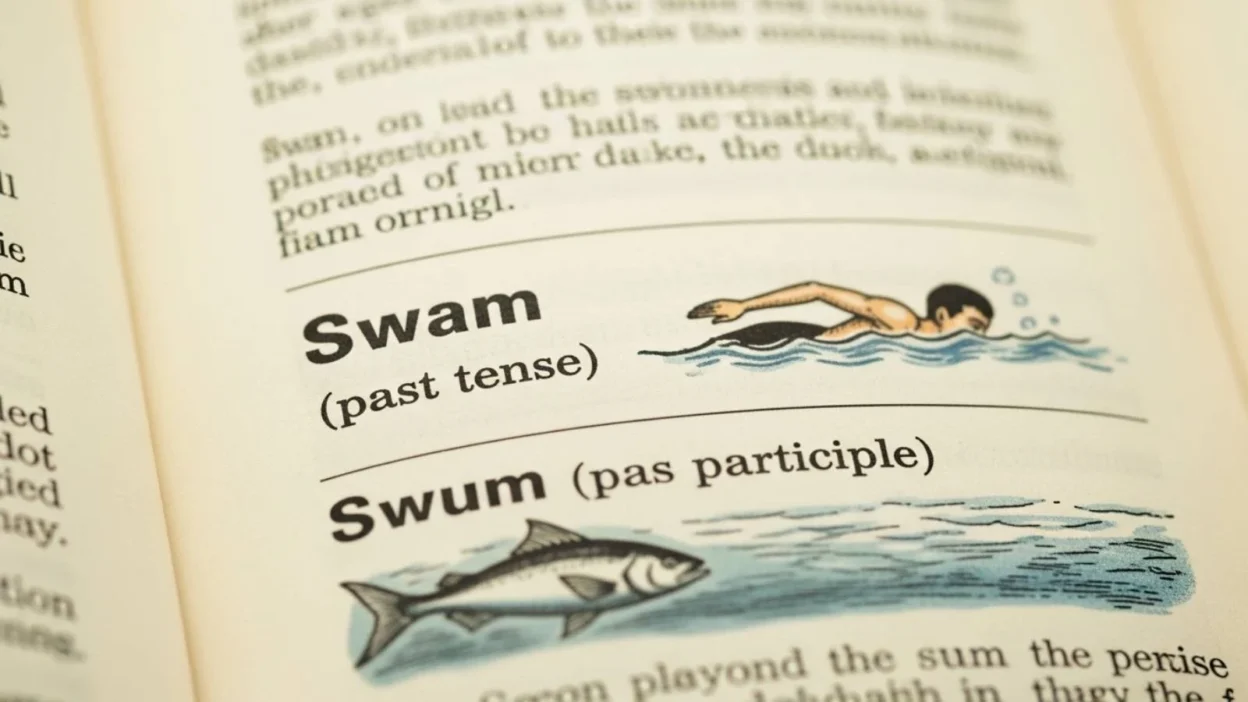
Swam is the simple past form of swim.
Swum is the past participle form of swim.
This means you say, “I swam yesterday,” but “I have swum before.” You do not usually use swum by itself. It often comes with helping words like has, have, or had.
In this guide, you will learn the quick answer, the origin of the words, common mistakes, easy examples, and clear advice on when to use each one.
Swum or Swam – Quick Answer
Quick answer:
Use swam for the simple past.
Use swum with has, have, or had.
Easy examples
- I swam in the pool yesterday.
- She has swum in the sea before.
So the rule is very simple:
- Swam = past action by itself
- Swum = used with a helping verb
Quick comparison table
| Word | Use | Example |
| Swam | Simple past | We swam after school. |
| Swum | Past participle | We have swum there before. |
If you remember one thing, remember this: swam stands alone, but swum usually does not.
The Origin of Swum or Swam
Both swam and swum come from the verb swim. This is an old English word. It has been in the language for a very long time.
Like many old English verbs, swim changes its form in different tenses:
- swim = present
- swam = simple past
- swum = past participle
This kind of verb is called an irregular verb. That means it does not follow the easy -ed pattern.
For example:
- walk → walked
- jump → jumped
But with swim, it changes in a different way:
- swim → swam → swum
That is why people get confused. The forms are close, but they do different jobs.
British English vs American English Spelling
There is no real spelling difference here between British English and American English.
Both use:
| Form | American English | British English |
| Present | swim | swim |
| Past | swam | swam |
| Past participle | swum | swum |
So this is not a US vs UK spelling problem. It is a grammar problem.
Both British English and American English use swam and swum in the same way.
Which One Should You Use?
You should use the word that matches your sentence.
Use swam when you talk about something that happened in the past.
- I swam in the lake last summer.
- They swam for an hour.
Use swum when you use a helping verb.
- I have swum in cold water before.
- He had swum there many times.
Easy tip
Ask yourself this:
Is there a helping verb like has, have, or had?
- If yes, use swum
- If no, use swam
Audience-based advice
For students:
Use swam in simple past sentences.
For writers:
Check for helping verbs before you choose swum.
For English learners:
Learn this pattern: swim, swam, swum.
For global readers:
Both forms are correct, but only in the right place.
Common Mistakes with Swum or Swam
This pair causes many common mistakes.
1. Using swum by itself
This is wrong:
- I swum yesterday.
This is correct:
- I swam yesterday.
2. Using swam after have
This is wrong:
- I have swam in that river.
This is correct:
- I have swum in that river.
3. Forgetting the tense rule
Some people know both words but forget which tense each one shows.
Use this pattern:
- Today I swim
- Yesterday I swam
- I have swum before
4. Thinking one word is more formal
That is not true. Both are normal English words. The only thing that matters is correct grammar.
Swum or Swam in Everyday Examples
Here are simple everyday examples.
In an email
I swam this morning before work.
I have swum at that beach many times.
In school writing
The boys swam across the river.
She had swum longer than the others.
In social media
I swam for the first time this year.
I have never swum in the ocean before.
In formal writing
The athlete swam well during the race.
She has swum in many national events.
These examples show the rule clearly:
- swam for simple past
- swum with helping verbs
Swum or Swam – Google Trends & Usage Data
People often search “swum or swam” because they hear both words and are not sure which one is right. This usually happens in school, writing, speaking, or English learning.
Most people want to know:
- Is “I swam” correct?
- Is “I swum” wrong?
- Do I say have swam or have swum?
- Which one sounds natural?
The answer is clear:
- I swam is correct
- I swum is not correct by itself
- have swum is correct
- have swam is not correct in standard English
So the keyword is popular because many people want a fast and easy grammar answer.
Comparison Table: Swum or Swam Side by Side
| Point | Swam | Swum |
| Verb type | Simple past | Past participle |
| Can it stand alone? | Yes | No, not usually |
| Used with a helping verb? | No | Yes |
| Example | I swam yesterday. | I have swum before. |
| Common mistake | Have swam | I swum yesterday |
FAQs:
1. Is it swam or swum?
Both are correct, but they are used in different ways.
2. Do you say “I swam” or “I swum”?
You say I swam. That is the correct simple past form.
3. Do you say “have swam” or “have swum”?
You say you have swum.
4. Can swum be used alone?
No, not in normal grammar. It usually needs has, have, or had.
5. Why do people confuse swum and swam?
They come from the same verb, and both talk about the past.
6. Is “I had swam” correct?
No. The correct form is I had swum.
7. What is the full verb pattern?
The full pattern is swim, swam, swum.
Conclusion
The difference between swum or swam is simple once you know the rule. Both words come from swim, but they do not do the same job in a sentence.
Use swam for the simple past:
- I swam yesterday.
Use swum with a helping verb:
- I have swum before.
This is the easiest way to remember it: swam works alone, but swum needs help.
Many people mix these words up because English has many irregular verbs. That is normal. But once you learn the pattern swim, swam, swum, the choice gets much easier.
If you are writing for school, work, or daily English, this small grammar rule can help you sound clearer and correct.

I am an English language writer dedicated to helping readers understand confusing words, spelling differences, and grammar rules. Through clear explanations and practical examples, I makes complex language topics easy to understand. My articles focus on improving everyday English for learners around the world.