
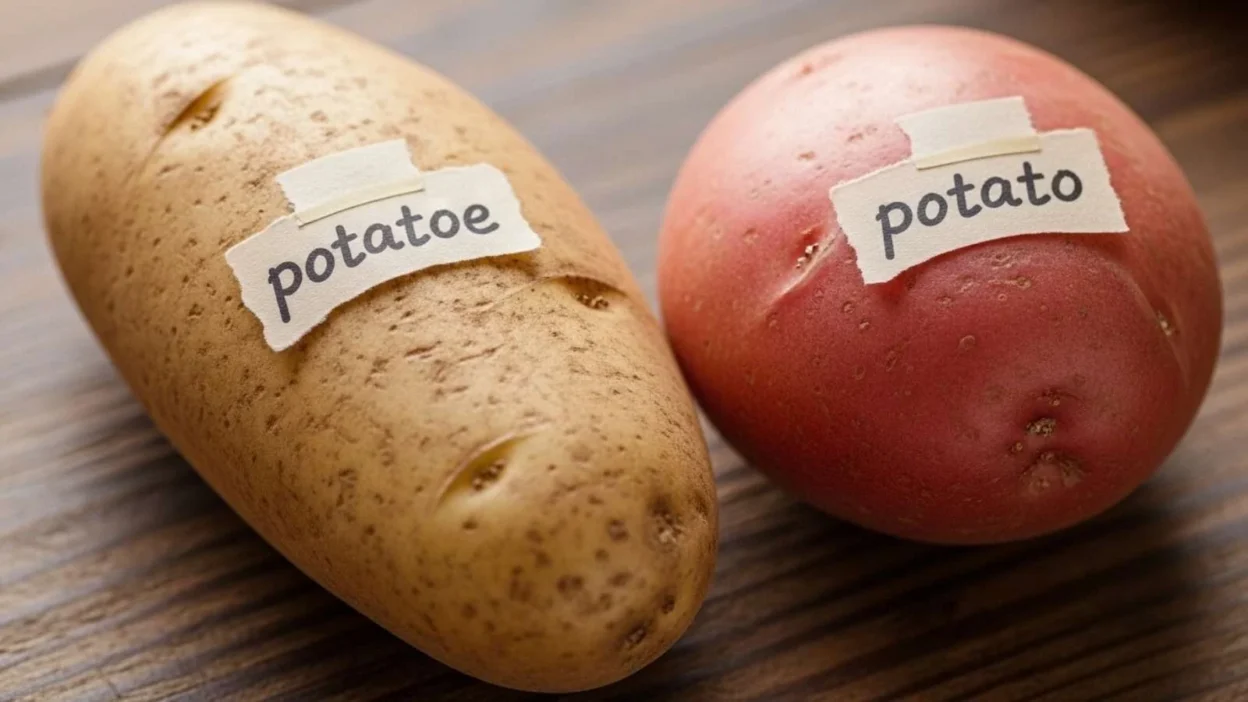
Many people search “potatoe or potato” because they are unsure which spelling is correct. The confusion often happens when writing emails, school assignments, or social media posts. Since English has many spelling rules, it is easy to make mistakes with simple words.
The word potato is very common. People use it when talking about food like fries, chips, mashed potatoes, and baked potatoes. Because the plural form is potatoes, some people think the singular word should be potatoe. This creates confusion.
However, only one spelling is correct in standard English. Knowing the correct form helps you avoid errors in writing and communication.
In this guide, we will explain the difference between potatoe or potato in very simple language. You will learn the correct spelling, the origin of the word, common mistakes, and how people use it in everyday writing. By the end, you will clearly understand which spelling to use and why.
Potatoe or Potato – Quick Answer
The quick answer is simple.
| Word | Correct or Incorrect | Meaning |
|---|---|---|
| Potato | ✅ Correct | A round vegetable that grows underground |
| Potatoe | ❌ Incorrect | A common spelling mistake |
Example sentences:
- I baked a potato for dinner.
- She planted a potato in the garden.
The correct plural form is potatoes, which is why some people mistakenly write potatoe.
The Origin of Potatoe or Potato
The word potato has an interesting history.
The term comes from the Spanish word “patata.” Spanish explorers brought the potato from South America to Europe in the 1500s. Over time, the word changed in English to potato.
The spelling potatoe appeared occasionally in older writing, but it was never the standard spelling. Today, modern English dictionaries only accept potato.
The plural form follows a common English rule.
Words that end in “o” often add “es” to make the plural.
Example:
| Singular | Plural |
|---|---|
| Potato | Potatoes |
| Tomato | Tomatoes |
| Hero | Heroes |
Because the plural ends in -oes, some writers mistakenly add e to the singular form.
British English vs American English Spelling
For the word potato, the spelling is the same in both US and UK English.
Spelling Comparison Table
| Word | US English | UK English |
|---|---|---|
| Potato | Potato | Potato |
| Potatoe | Incorrect | Incorrect |
| Potatoes | Potatoes | Potatoes |
So there is no difference between American and British spelling for this word.
Which Spelling Should You Use?
The correct spelling is always potato.
United States
Use potato in all writing.
Example: “I bought a large potato for lunch.”
United Kingdom and Commonwealth Countries
The spelling remains the same.
Example: “The farmer harvested many potatoes this year.”
Global Audience
If you are writing for international readers, always use potato.
Never use potatoe, because it is considered a spelling mistake.
Common Mistakes with Potatoe or Potato
Many people make simple errors when writing this word.
| Mistake | Correct Form |
|---|---|
| potatoe | potato |
| potato’s (wrong plural) | potatoes |
| potatos | potatoes |
| potato’s chips | potato chips |
Simple Rule
- Potato = singular
- Potatoes = plural
Remember: the singular form never ends with “e.”
Potatoe or Potato in Everyday Examples
Here are some simple examples of how the word appears in daily writing.
Email Example
“Please buy one potato and some onions from the store.”
News Example
“Farmers reported a strong potato harvest this year.”
Social Media Example
“Nothing is better than hot potato fries!”
Formal Writing Example
“The potato is one of the most widely grown vegetables in the world.”
These examples show how the correct spelling appears in different types of communication.
Potatoe or Potato – Google Trends & Usage Data
Search data shows that many people look up potatoe or potato to check the correct spelling.
Common search phrases include:
- potato or potatoe
- how to spell potato
- potato plural spelling
- potatoes spelling
Search Interest by Country
| Country | Search Interest |
|---|---|
| United States | High |
| United Kingdom | High |
| Canada | Medium |
| Australia | Medium |
People usually search for this term when they are writing or learning English spelling.
Potatoe vs Potato Comparison Table
| Feature | Potato | Potatoe |
|---|---|---|
| Correct spelling | Yes | No |
| Used in dictionaries | Yes | No |
| Meaning | A common vegetable | Spelling mistake |
| Example sentence | I cooked a potato. | Incorrect spelling |
This table makes the difference very clear.
FAQs:
1. Is potatoe a real word?
No. Potatoe is not the correct spelling in modern English.
2. Why do people write potatoe?
People often confuse the singular word with the plural potatoes.
3. What is the plural of potato?
The plural form is potatoes.
4. Is the spelling different in the UK and US?
No. Both countries use the same spelling: potato.
5. How do you use potato in a sentence?
Example: “I ate a baked potato with butter.”
6. Is potato a vegetable?
Yes. A potato is a root vegetable grown underground.
7. Why do potatoes end with “oes”?
English grammar adds -es to some words that end in o.
Conclusion
The correct word is potato. It refers to a common vegetable that grows underground and is used in many foods. The spelling potatoe is incorrect and should not be used in modern English writing.
The confusion usually happens because the plural form is potatoes, which ends with -oes. Some writers mistakenly add the letter e to the singular word. However, the singular form always remains potato.
Another important point is that there is no difference between British and American spelling for this word. Both use the same form: potato.
If you remember one simple rule, you will never make this mistake again. Use potato for one and potatoes for more than one.
Learning these small spelling details helps improve your writing and communication. It also ensures that your English looks clear, professional, and correct.

I write educational content focused on English vocabulary, word comparisons, and grammar clarity. I enjoy breaking down complex language topics into simple explanations that readers of all levels can understand. My work helps learners improve their confidence in writing and communication.