Many people search for “hemorrhoids or prolapse” because both problems can cause a lump or bulge near the anus. That can make them look the same at first. But they are not the same problem.
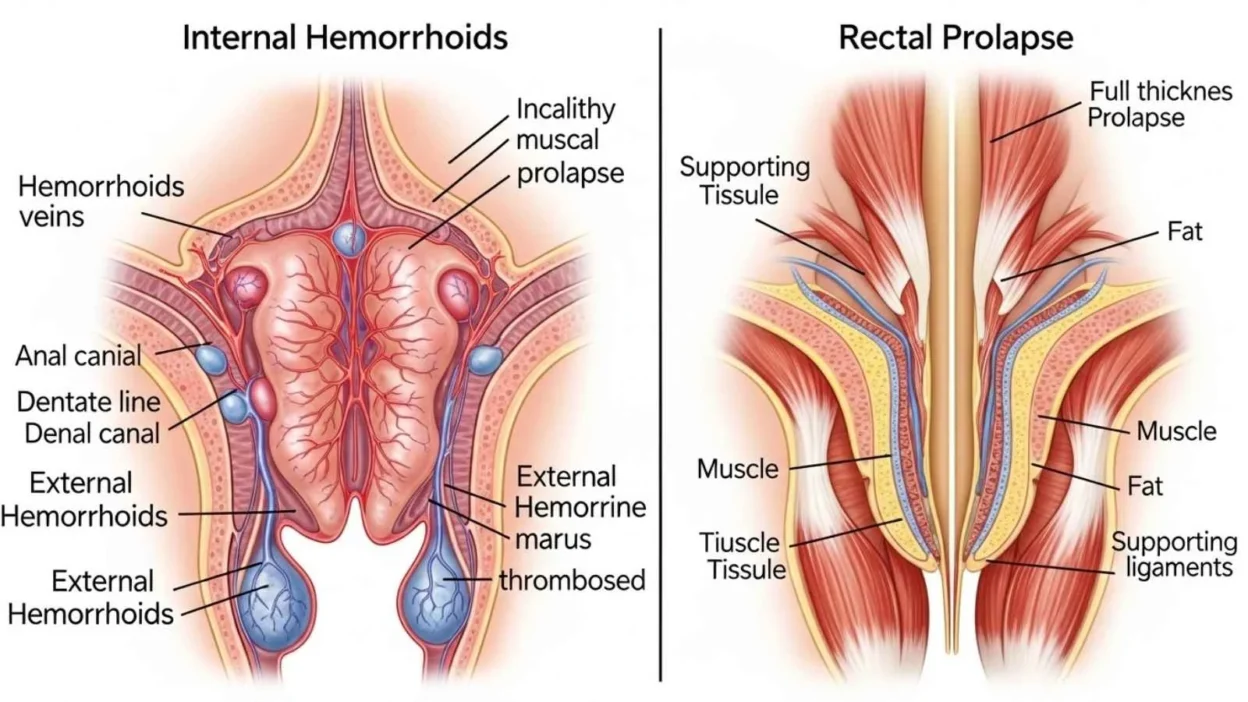
Hemorrhoids are swollen veins in or around the rectum and anus. They may cause itching, pain, or bright red bleeding. Rectal prolapse happens when part of the rectum slips down and may come out through the anus. It may look like hemorrhoids, but it is a different condition.
People often want a quick answer because they feel worried or confused. That makes sense. In this guide, “prolapse” means rectal prolapse, because that is the type most often confused with hemorrhoids. You will learn the meaning, the difference, and a few easy examples. If you have bleeding, severe pain, or a new lump, it is important to get checked by a doctor because these symptoms can have more than one cause.
Hemorrhoids or Prolapse – Quick Answer
The quick answer is simple:
- Hemorrhoids are swollen veins.
- Rectal prolapse is when the rectum slips down and bulges out.
Here is an easy table:
| Problem | What it is | Simple idea |
| Hemorrhoids | Swollen veins in or around the anus and rectum | A blood vessel problem |
| Prolapse | The rectum slips down and may come out | A tissue support problem |
So, if you are choosing between hemorrhoids or prolapse, remember this:
Hemorrhoids = swollen veins
Prolapse = slipping rectum
What Are Hemorrhoids?
Hemorrhoids are swollen veins in the lower rectum or around the anus. They can be inside or outside.
Internal hemorrhoids are inside the rectum. They may bleed, but they are often not very painful. External hemorrhoids are under the skin around the anus. They may itch, hurt, or bleed. Some internal hemorrhoids can also bulge outside the anus. This is called a prolapsed hemorrhoid.
This is one reason people get confused. A prolapsed hemorrhoid is still a hemorrhoid. It is not the same as rectal prolapse.
Easy examples
- “I have bright red blood after I poop.” This can happen with hemorrhoids.
- “I have itching and a small painful lump.” This can happen with hemorrhoids too.
What Is Prolapse?
In this article, prolapse means rectal prolapse. This happens when the rectum slips down because the muscles and tissues that hold it in place have become weak.
Part of the rectum may bulge out through the anus. It can feel like pressure or like something is falling out. It may also cause leaking or trouble controlling bowel movements.
Unlike simple hemorrhoids, rectal prolapse usually does not go away on its own.
Easy example
- “I feel like something is coming out after I use the toilet.” That may be rectal prolapse.
The Origin of the Terms
The word hemorrhoids is a medical name for swollen veins in this area of the body. The word prolapse means something has slipped down from its normal place.
So the words already show the difference:
- Hemorrhoids are about veins.
- Prolapse is about tissue slipping down.
That is why these two problems are different, even if both can make a lump.
British English vs American English Spelling
There is one small spelling difference.
In American English, the word is usually hemorrhoids.
In British English, it is often haemorrhoids or piles.
The word prolapse stays the same in both.
Spelling comparison table
| Term | US English | UK English |
| Hemorrhoids | Hemorrhoids | Haemorrhoids / Piles |
| Prolapse | Prolapse | Prolapse |
Which Word Should You Use?
Use hemorrhoids when you mean swollen veins in or around the anus.
Use rectal prolapse when you mean the rectum slipping down and bulging out.
If you are writing for school or health content, rectal prolapse is the clearest phrase because the word prolapse can also be used for other body parts.
Common Mistakes with Hemorrhoids or Prolapse
Many people make these mistakes:
| Mistake | Correct idea |
| Hemorrhoids and prolapse are the same | They are different problems |
| Every lump is a hemorrhoid | It could be something else |
| A prolapsed hemorrhoid is the same as rectal prolapse | They are not the same |
| Rectal prolapse will go away by itself | It often needs medical care |
These mistakes happen because the two conditions can look alike. But the cause is different.
Easy rule
Hemorrhoids are swollen veins. Prolapse is slipping tissue.
Hemorrhoids or Prolapse in Everyday Examples
Here are easy examples:
In an email
“I thought it was hemorrhoids, but the doctor checked for rectal prolapse too.”
In health writing
“Hemorrhoids are swollen veins. Rectal prolapse means the rectum slips down.”
In simple speech
“A bulge does not always mean hemorrhoids.”
These examples show why a doctor may need to check the area instead of guessing.
Hemorrhoids or Prolapse – What People Usually Mean
When people search “hemorrhoids or prolapse,” they usually want to know why they have:
- a lump
- bleeding
- pain
- itching
- a feeling that something is coming out
This is not really a spelling question. It is a health question. Many people want a fast answer, but it is important to be careful. Bright red bleeding, itching, pain, or lumps can happen with hemorrhoids. A bulge that feels like tissue coming out may point more toward rectal prolapse.
Hemorrhoids vs Prolapse Comparison Table
| Feature | Hemorrhoids | Rectal Prolapse |
| What it is | Swollen veins | Rectum slips down |
| Bulge or lump | Yes | Yes |
| Bleeding | Common | Can happen |
| Itching | Common | Less common |
| May need surgery | Sometimes | Often |
| Usually goes away by itself | Sometimes it improves | Usually no |
FAQs:
1. Are hemorrhoids and prolapse the same?
No. Hemorrhoids are swollen veins. Rectal prolapse is when the rectum slips down.
2. Can hemorrhoids stick out?
Yes. Internal hemorrhoids can bulge out. This is called a prolapsed hemorrhoid.
3. Can rectal prolapse look like hemorrhoids?
Yes. It can look or feel similar.
4. Which one is more serious?
Rectal prolapse is often more serious because it usually does not go away on its own and may need surgery.
5. Do hemorrhoids always hurt?
No. Internal hemorrhoids may bleed, but often do not hurt much. External hemorrhoids are more likely to hurt or itch.
6. When should I see a doctor?
You should get checked if you have bleeding, severe pain, a new bulge, leaking, or trouble controlling bowel movements.
Conclusion
The difference between hemorrhoids or prolapse is easier when you focus on the cause. Hemorrhoids are swollen veins in or around the anus and rectum. Rectal prolapse is when the rectum slips down and may come out through the anus. Even though both can cause a bulge, they are not the same problem.
This topic confuses many people because a hemorrhoid can also bulge out. But a prolapsed hemorrhoid is still different from rectal prolapse. One is a vein problem. The other is a tissue support problem. That is the easiest way to remember it.
If you have bleeding, pain, itching, or a lump, it is best not to guess. A doctor can tell the difference and help you get the right treatment. That matters because hemorrhoids may improve with simple care, but rectal prolapse often needs more treatment.

I am an English language writer dedicated to helping readers understand confusing words, spelling differences, and grammar rules. Through clear explanations and practical examples, I makes complex language topics easy to understand. My articles focus on improving everyday English for learners around the world.