
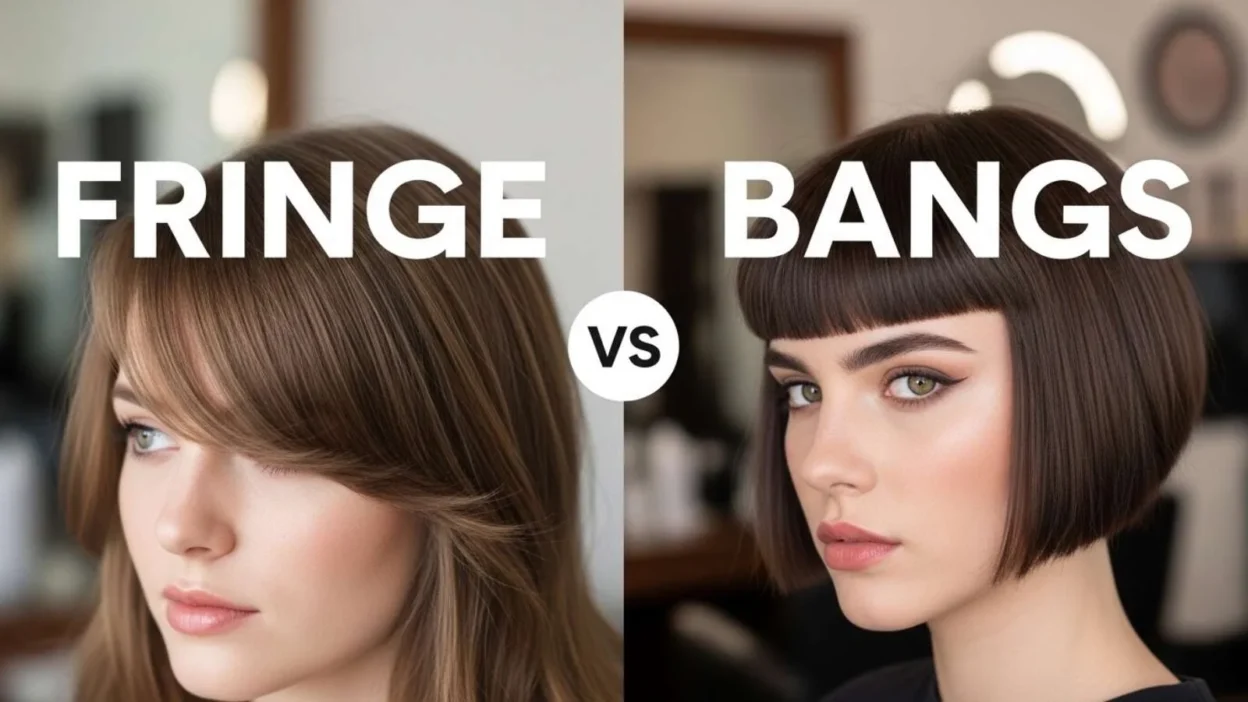
Many people search for fringe or bangs because they want to know which word is right. They may hear bangs in one place and fringe in another. Then they wonder if the two words mean the same thing or if they are different hairstyles. This can be confusing, especially for students, writers, beauty bloggers, and people talking to hairstylists.
The simple answer is this: fringe and bangs usually mean the same hairstyle. Both words describe the front section of hair cut to fall over the forehead. The main difference is not the hairstyle. The main difference is the region. In British English, people usually say fringe. In American English, people usually say bangs.
In this article, you will get a quick answer, simple examples, easy tables, and clear advice. It will help you know when to use fringe and when to use bangs in a very easy way.
Fringe or Bangs – Quick Answer
Quick answer:
Use fringe in British English. Use bangs in American English. In most cases, both words mean the same haircut at the front of the hair.
Here is the easy difference:
- Fringe = more common in the UK and other places that follow British English
- Bangs = more common in the US
Simple examples
- “She got a new fringe before the party.”
- “She got new bangs before the party.”
- “I want a short fringe with layers.”
- “I want short bangs with layers.”
Both examples talk about the same kind of hair. Only the word changes.
The Origin of Fringe or Bangs
This keyword is different from some grammar questions. Here, people are comparing two regional words for almost the same thing.
Origin of “fringe.”
The word fringe has long been used in English for an edge or border. In hair talk, it came to mean the front edge of the hair that falls over the forehead.
Origin of “bangs.”
The word bangs is mainly used in American English for the same hairstyle. It became the common US word for a haircut across the front.
Why do people mix them up
People compare fringe or bangs because both words are used in beauty talk, hair salons, fashion articles, and social media. Someone in London may say fringe, while someone in New York may say bangs. If you do not know the regional difference, it can sound like two different haircuts. But in most cases, they mean the same thing.
British English vs American English Spelling
Here is the key point: this is mostly a British English vs American English word choice issue.
- Fringe is the common word in British English.
- Bangs is a common word in American English.
So this topic is not really about spelling. It is about regional vocabulary.
Comparison table
| Word | British English | American English | Meaning |
| fringe | Common | Less common | Hair over the forehead |
| bangs | Less common | Common | Hair over the forehead |
Simple explanation
If you are writing for a UK reader, fringe will sound more natural. If you are writing for a US reader, bangs will sound more natural.
Which Word Should You Use?
The better question is this:
Which word should you use for your audience?
Use “fringe” when:
- You are writing for a British audience
- You are speaking in British English
- You want UK-style beauty wording
Example:
“She cut her fringe shorter.”
Use “bangs” when:
- You are writing for an American audience
- You are speaking in American English
- You want US-style beauty wording
Example:
“She cut her bangs shorter.”
Advice from the audience
- For UK readers: use fringe
- For US readers: use bangs
- For global readers: either can work, but fringe may sound more international to some readers, while bangs is stronger for US beauty content
The best choice depends on who will read your writing.
Common Mistakes with Fringe or Bangs
Many people make small mistakes with these words. Here are some common ones.
1. Thinking they are different hairstyles
Wrong: “Fringe and bangs are always two different cuts.”
Right: “In most cases, fringe and bangs mean the same front hair section.”
2. Using the wrong word for the audience
Wrong: using bangs for a UK beauty article without thinking about the audience
Right: use fringe for UK readers and bangs for US readers
3. Thinking it is a spelling mistake
Wrong: “Fringe is wrong. Bangs is correct.”
Right: “Both are correct, but they are used in different regions.”
4. Forgetting context
Wrong: “Everyone everywhere uses the same hair word.”
Right: “Hair words can change by country.”
5. Mixing style names
Wrong: “Curtain bangs and fringe are never related.”
Right: “Curtain bangs are a type of fringe or bangs style.”
Quick correction table
| Mistake | Better form |
| Fringe and bangs are different every time | They usually mean the same hairstyle |
| Only bangs is correct | Both words are correct |
| Only fringe is correct | Both words are correct |
| The audience does not matter | Audience matters a lot |
Fringe or Bangs in Everyday Examples
Here is how these words are used in normal life.
In emails
- “I am thinking about getting a fringe this summer.”
- “I want soft bangs that are easy to style.”
In news writing
- “The actor appeared with a new fringe on the red carpet.”
- “The singer showed off fresh bangs in her latest post.”
On social media
- “Should I get a fringe?”
- “Do these bangs suit my face?”
In formal writing
- “The model wore her hair with a soft fringe.”
- “The look was completed with straight bangs.”
These examples show that both words are common, but the region often decides which one sounds better.
Fringe or Bangs – Google Trends & Usage Data
The phrase fringe or bangs is popular because people often hear both words online. Beauty videos, fashion posts, and salon talk use both terms, so people want to know if they mean the same thing.
Simple trend idea
- Searches for fringe are often stronger in places that use British English.
- Searches for bangs are often stronger in the United States.
Usage by country and context
- Fringe is more common in UK-style beauty writing.
- Bangs is more common in US-style beauty writing.
- Both words are used in fashion, salon talk, and hairstyle guides.
Comparison table: fringe vs bangs
| Point | Fringe | Bangs |
| Main region | UK / British English | US / American English |
| Meaning | Hair over the forehead | Hair over the forehead |
| Common in salon talk | Yes | Yes |
| Same hairstyle? | Usually yes | Usually yes |
| Better for the US audience | Less natural | More natural |
| Better for the UK audience | More natural | Less natural |
FAQs:
1. Is fringe the same as bangs?
Yes. In most cases, both words mean the haircut across the front of the forehead.
2. Which word is British?
Fringe is a common British English word.
3. Which word is American?
Bangs is a common American English word.
4. Are fringe and bangs different hairstyles?
Usually no. They usually have the same hairstyle, but the name changes by region.
5. Should I say fringe or bangs in a blog post?
Choose the word that fits your audience. Use fringe for UK readers and bangs for US readers.
6. Can I use both words in one article?
Yes, but it is better to stay consistent. You can mention both once, then use the one that fits your audience.
7. Which word is better for SEO?
That depends on your audience. Bangs may work better for US readers. Fringe may work better for UK readers.
Conclusion
The difference between fringe or bangs is simple once you know the rule. In most cases, they mean the same hairstyle: a haircut that falls over the forehead. The main difference is the region. Fringe is more common in British English. Bangs are more common in American English.
This means the best word depends on your audience, not on the haircut itself. If you are writing for UK readers, fringe will sound more natural. If you are writing for US readers, bangs will sound more natural. Both words are correct, and both are widely used in hair and beauty content.
For bloggers, writers, students, and salon owners, this is useful to know. The right word helps your writing feel clear and natural. When you are unsure, ask one simple question: Who am I writing for? That answer will help you choose the best word every time.

I am an English language writer dedicated to helping readers understand confusing words, spelling differences, and grammar rules. Through clear explanations and practical examples, I makes complex language topics easy to understand. My articles focus on improving everyday English for learners around the world.